
A Sea of
Screens
An event to creatively explore the
challenges & opportunities of
audiences using their phones during
live performances & immersive experiences.
Friday 28th November, 10am – 4pm
Daimler Powerhouse & The Nest, Coventry, UK
A Sea of
Screens
An event for creatively exploring the challenges & opportunities of audiences using their phones during live performances and immersive experiences.
Friday 28th November
10am – 4pm
Daimler Powerhouse & The Nest, Coventry, UK
Talks – Performances – Panel Discussions – Workshops

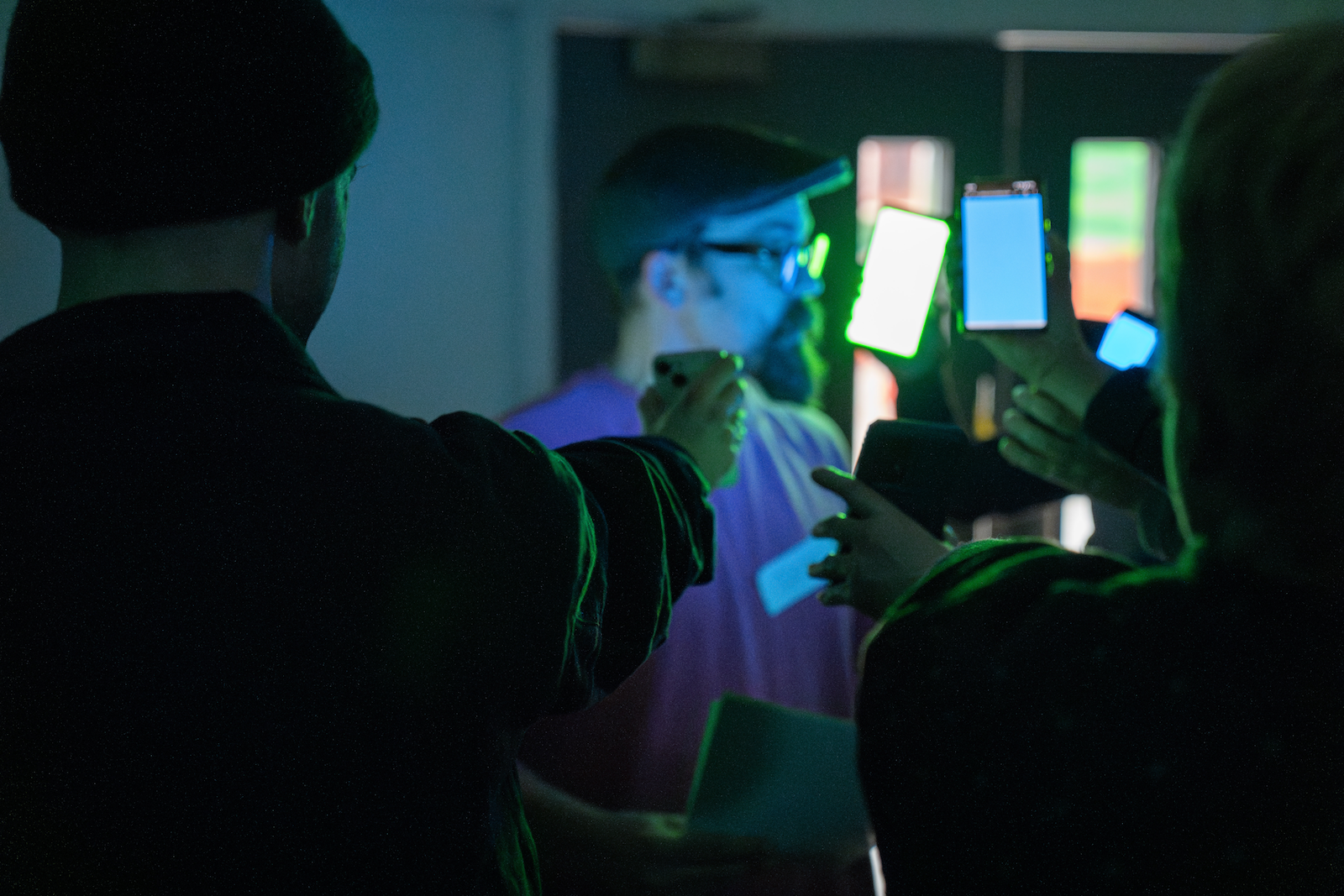
Do audience smartphones always break immersion in live events?
This event brings together artists, technologists and cultural sector professionals for critical discussion and creative exploration.
It’s a confusing time for smartphone users at live events. It’s incredibly common to see phones coming out at live music performances, in fact most festivals will encourage you to share and contribute content online to support the buzz around their event. But go to the theatre or cinema and it is still seriously frowned upon.
Across the immersive sector we find even more division. Spectacle-driven experiential projection events capitalise on their “Instagrammability”, yet if you go to an escape room you are normally asked to lock your phone away before entering for fear of breaking the immersion. Meanwhile other forms of immersive experience rely upon smartphone usage entirely, from self-guided audio tours to augmented reality exhibitions.
This event is being organised and delivered by Ludic Rooms as part of an Arts Council England supported programme of artist-led research and development.
EVENT PROGRAMME
MORNING
R&D Performances
Ideas & Inspiration
Panels & Talks
AFTERNOON
Workshops
Open Discussion
Networking & Sharing
Complimentary refreshments will be served throughout the day, including a professionally prepared vegetarian
hot lunch.
If you have any special dietary requirements, just let us know and we’ll do our best to accommodate.
🍲
“One cannot think well, love well, sleep well, if one has not dined well”
Virginia Woolf
CONTRIBUTORS
PERFORMANCES
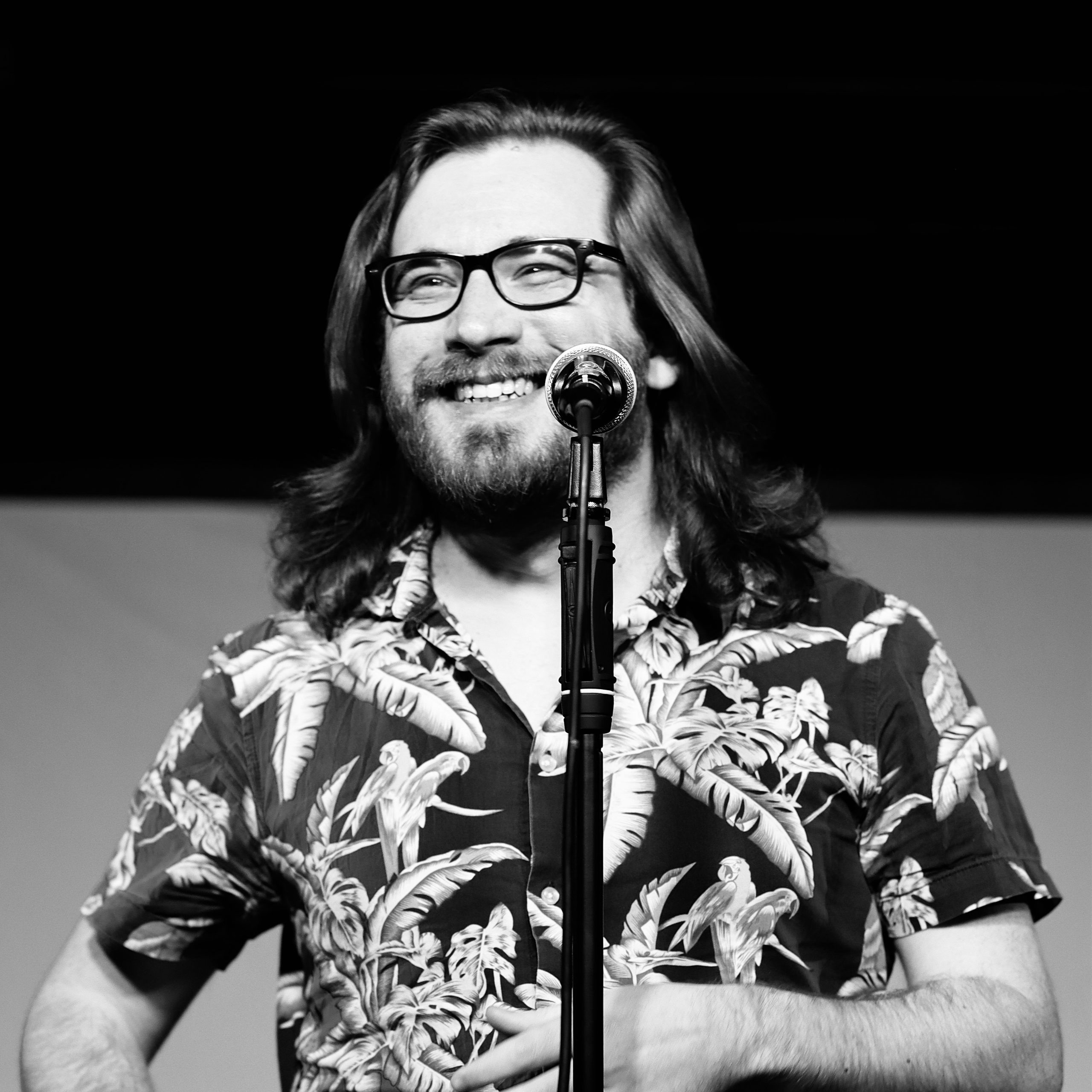
Joe Strickland
R&D Artist
Joe Strickland is a theatre maker, digital producer, creative technologist and access consultant with great energy and passion. Since 2012 they have been helping to create all manner of theatre and performance in venues across the country. Joe is Artistic Director and CEO of Chronic Insanity, staging thought-provoking and visually stimulating live performances in Nottingham since 2019.
WORKSHOPS & FACILITATORS
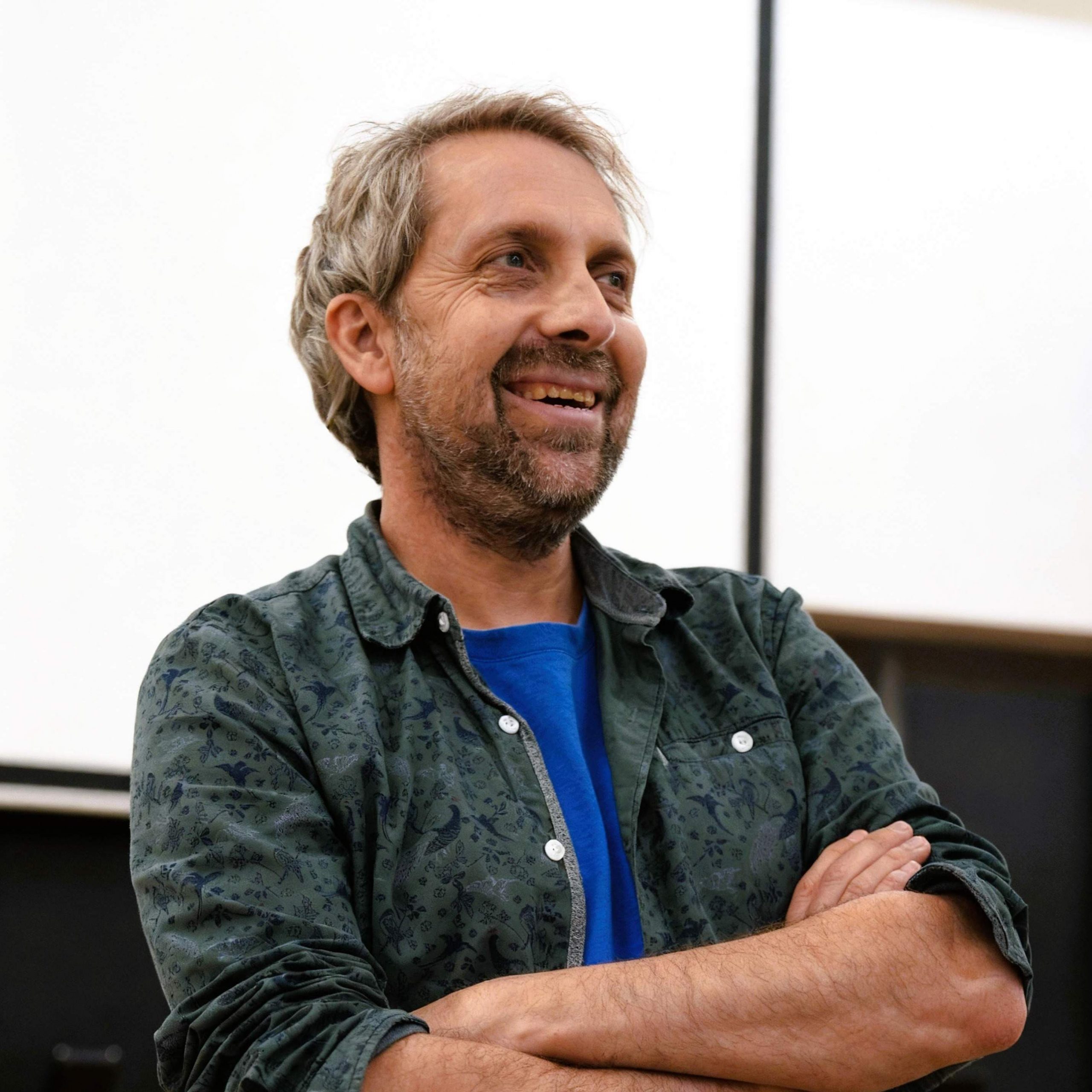
John Sear
LR NAiAD Team
John is a real-world games designer and software developer with 20 years’ experience in the games industry, specializing in creating experiences that blend technology, theatre, and interactive storytelling. Notable works include laser-pointer powered puzzle adventure for cinemas “Renga”, political spy thriller "A Moment of Madness" immersing audiences in a live car park stake-out, and "Rainbow for Amala," a smartphone interactive storybook addressing the climate crisis.
SPEAKERS
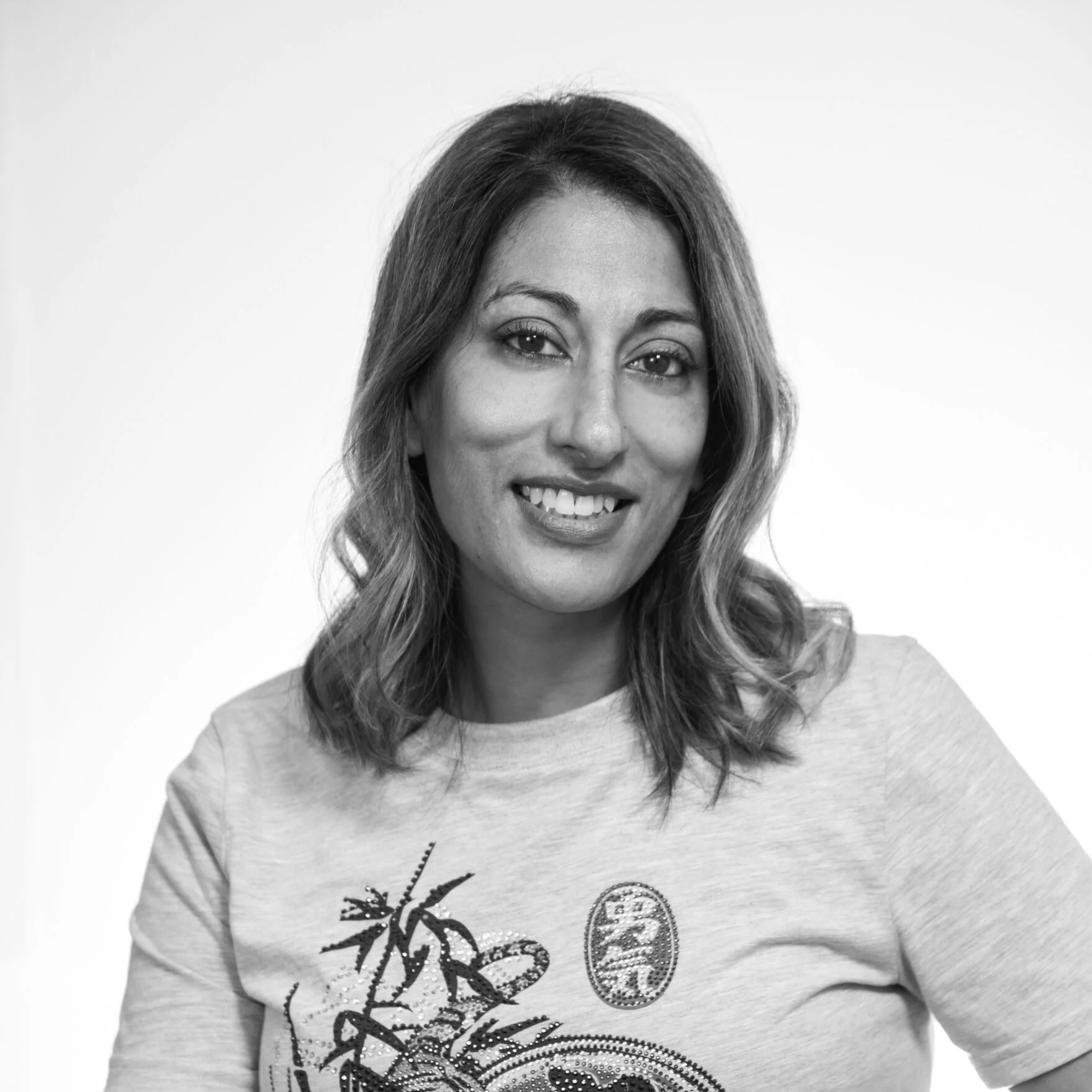
Harmeet Chagger
Speaker / Contributor
Harmeet is Creative Director at Surfing Light Beams, a media studio producing site specific projects and immersive adventures that unlock polymathic qualities within individuals using locative and interactive storytelling. She is also Head of Digital Innovation at The Space, looking at how digital innovation increases access and reaches new audiences. Her work has included researching Cultural Innovation at the Futurelab, Ars Electronica, and working on behaviour change campaigns as Digital Strategist at M&C Saatchi.
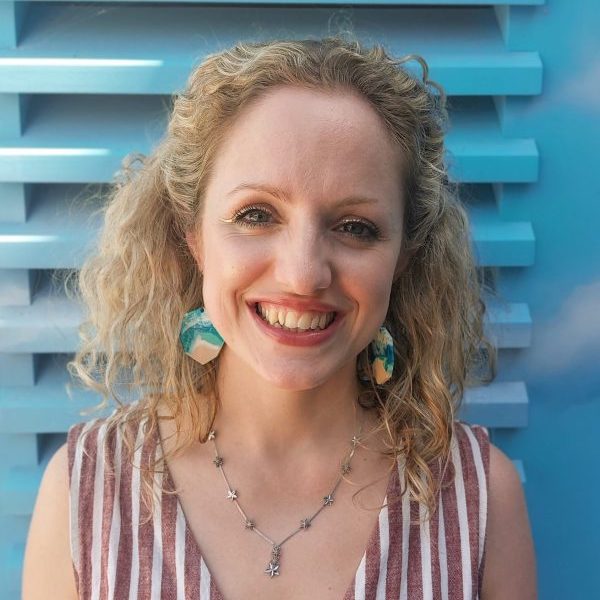
Charlotte Kalantari-Gregory
Speaker / Contributor
Charlotte is Executive Producer at The Paper Birds, a devising theatre company with a social and political agenda, recognised as UK leaders in devised verbatim theatre. She has worked across theatre, dance and contemporary circus for over 20 years and her expertise spans tour booking and producing, organisational leadership, fundraising and consultancy, working across touring theatre, theatre for young audiences, outdoor festivals, and community arts projects.
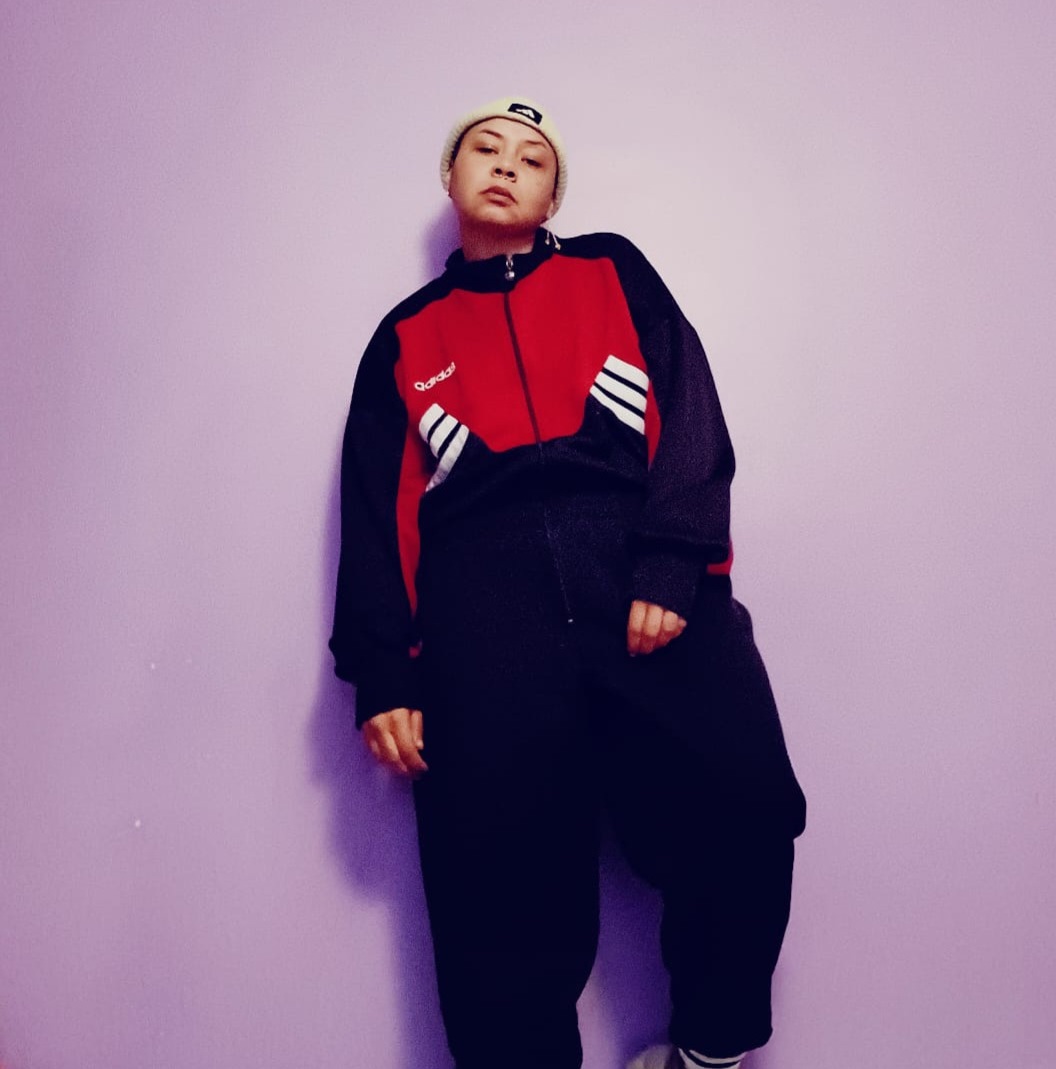
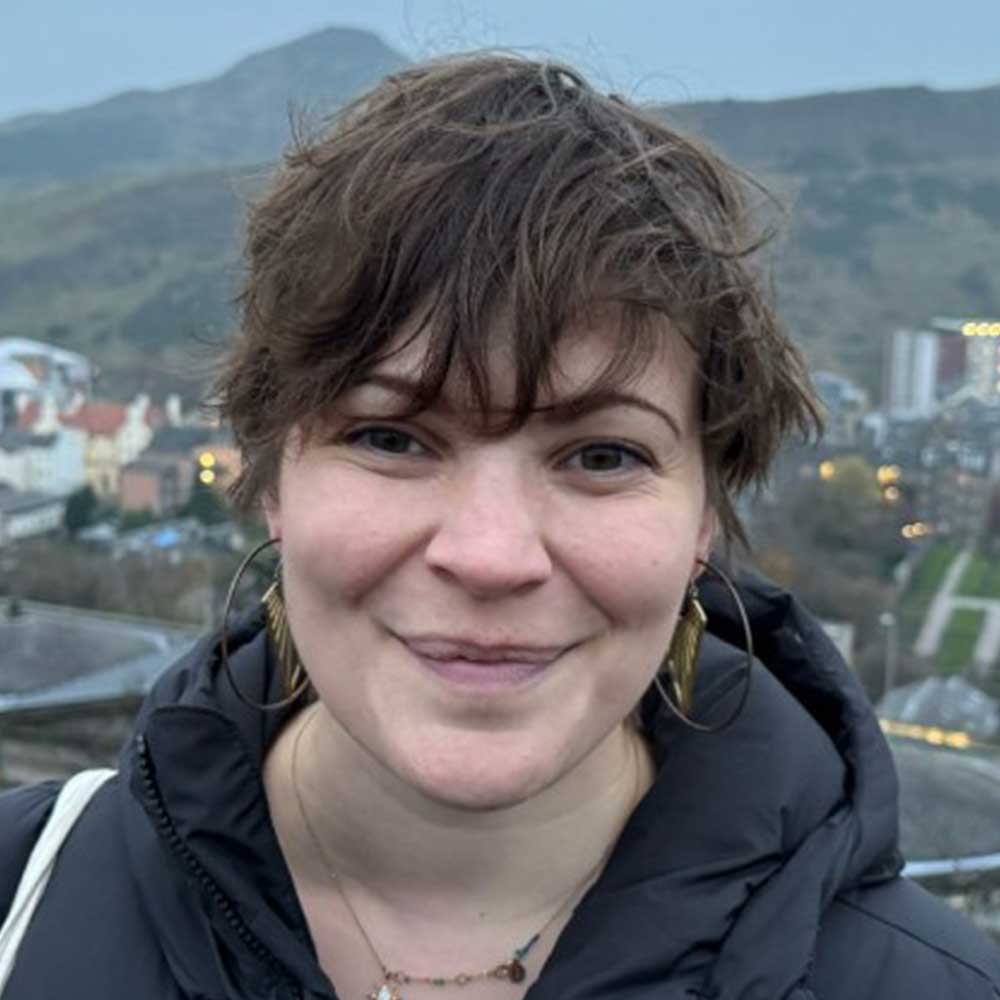
Lisa Franklin
LR NAiAD Team
Lisa is a queer and neurodivergent Artist, Producer & Access Consultant. Her practice is rooted in play & investigates cross-species collaboration and works with site specific, immersive and interactive performance. She feels passionately about working towards a more accessible, inclusive & democratic arts sector. Notable projects include At The Forest’s Edge (Royal Shakespeare Company) and Theatre of Wandering (Entelechy Arts/OiBokkeShi).
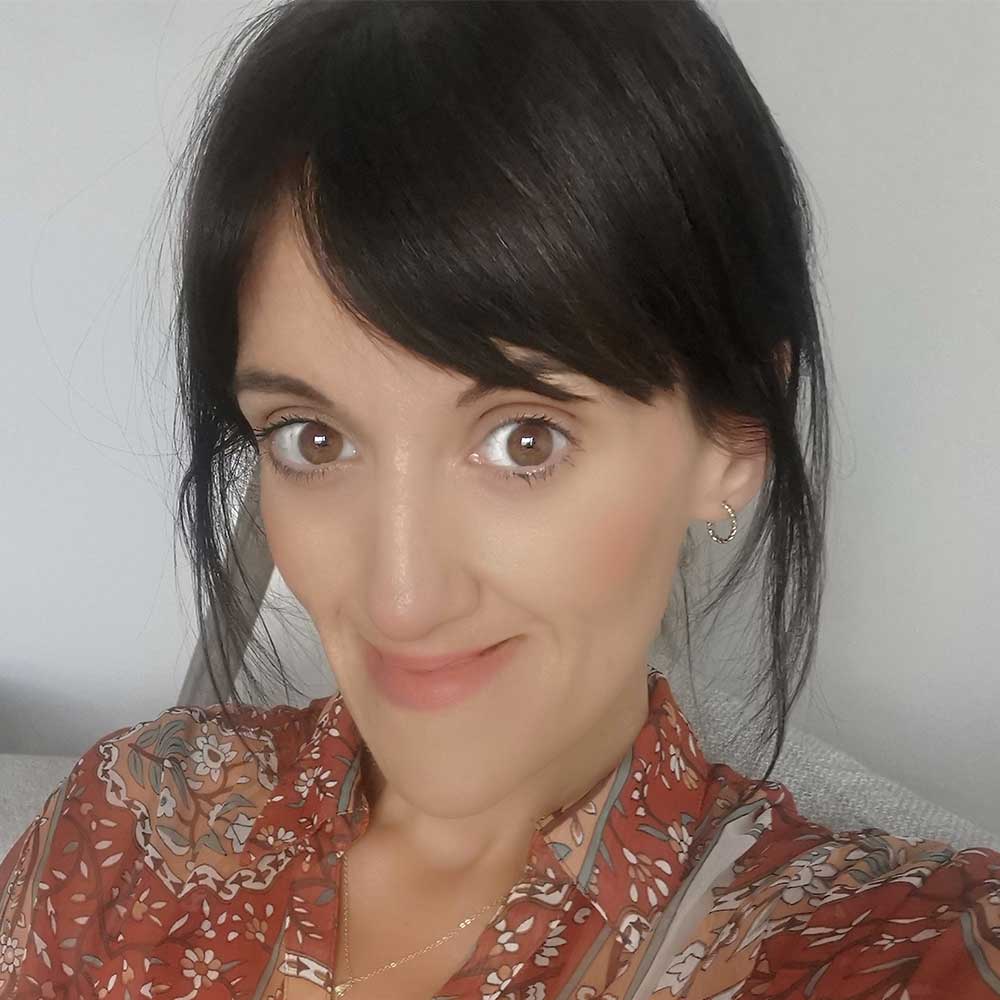
Lou Lomas
LR NAiAD Team
Lou is an independent outdoor arts producer. Previously she was the associate co-programmer for the Festival of Imagineers, and co-producer of Shop Front Festival in Coventry with Theatre Absolute and Orit Azaz, and was the producer (advanced event programme) for Coventry City of Culture Trust 2021 Bid. Lou is passionate about the development of outdoor work and supporting companies and artists working outdoors. Lou is currently a board member for Outdoor Arts UK.
YOU!
Speaker / Contributor
A Sea of Screens is an interactive event and we want everyone to contribute. The schedule for the day is designed to allow for debate and conversation, networking and sharing from all attendees.
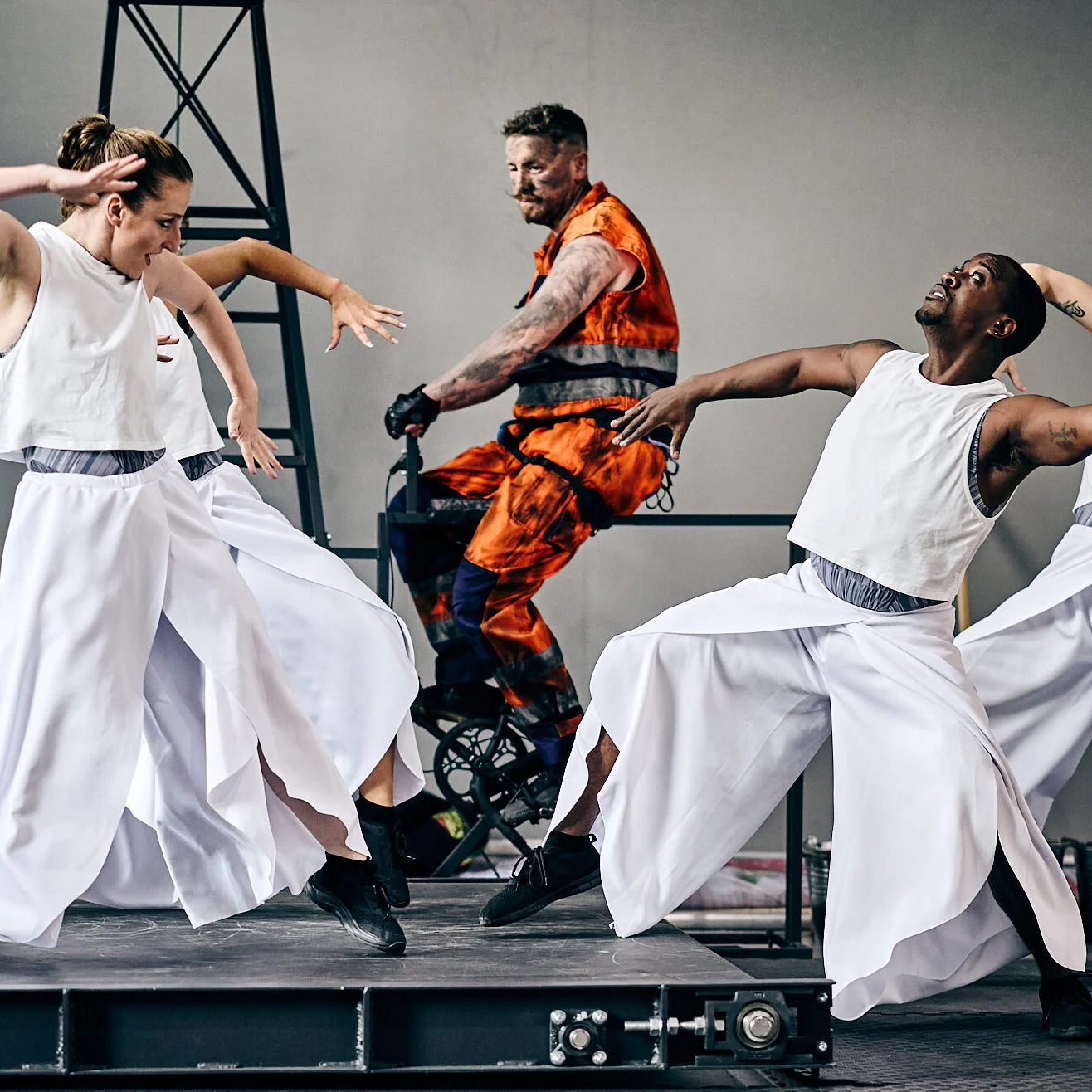
Highly Sprung Performance
R&D Artist
Highly Sprung tell compelling and relevant stories, where text moves and movement speaks. Their work with and for children and young people produces bold, spectacular performances and unforgettable experiences, in unexpected ways, spaces, and places. They deliver workshops to more than 5000 children and young people and reach an audience of nearly 40,000 with their touring performances across the UK and the world.
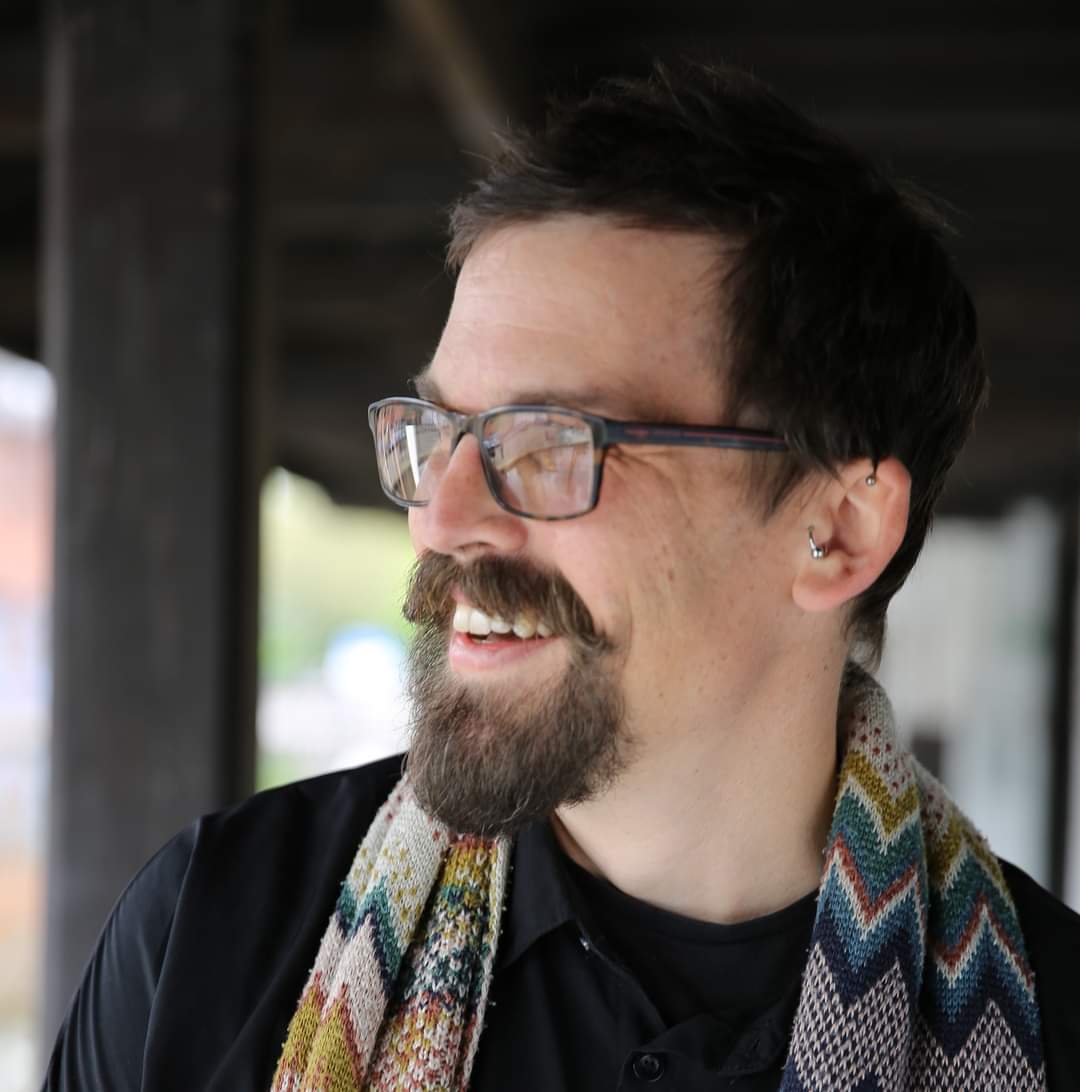
Dom Breadmore
LR NAiAD Team
Dom is an artist, academic and creative technologist who has spent more than 20 years using technology to help uncover the stories behind people and places through digital artworks, media installations, interactive and new media. He is the Artistic Director of Ludic Rooms, a socially-engaged arts and technology non-profit based in Coventry, UK who specialise in the development and delivery of immersive and playful experiences in outdoor and real-world spaces, alongside participatory programmes that demystify the use of technology as creative material.
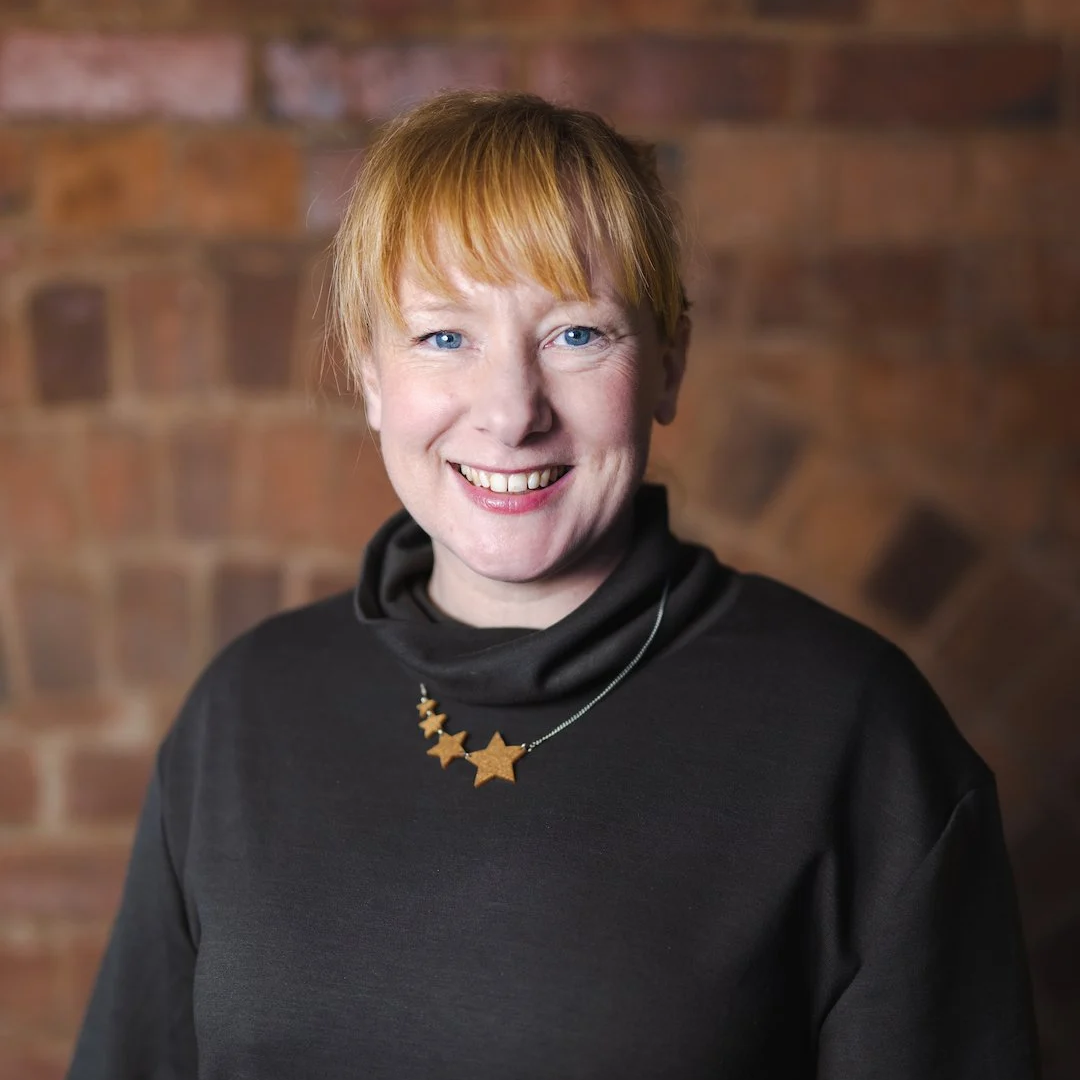
Sarah Worth
Speaker / Contributor
Sarah is Co-Founder and Executive Director of Highly Sprung, spearheading both the strategic and artistic elements of the charity’s work. With over 20 years of experience, Sarah has extensive experience in delivering participatory physical theatre projects, including in primary and secondary schools and is the Chair of Coventry’s Cultural Education Partnership. She is committed to children and young people through her work, enabling better futures through inspiring projects and performances.
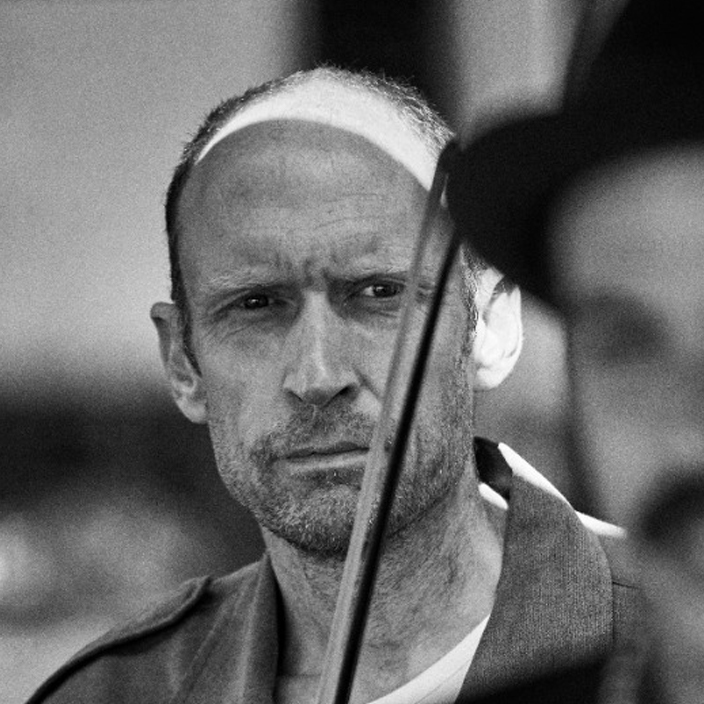
Derek Nisbet
Speaker / Contributor
Derek is a composer for theatre and has created scores for most of Talking Birds’ productions over 30+ years. He oversees the company’s Outdoor Arts portfolio and is concerned with accessibility in its widest forms. Derek’s music has been performed in venues and unusual spaces around the world – from Coventry’s iconic Cathedral to a Livestock Mart in Kilkenny to a harbourside in Angra – and he has undertaken projects with leading artists/companies including Claire Cunningham, Cães do Mar, Black Country Touring, Orchestra of the Swan, London Sinfonietta, the Royal Shakespeare Company and Symphony Hall, Birmingham.
EVENT PROGRAMME
MORNING
R&D Performances
Ideas & Inspiration
Panels & Talks
AFTERNOON
Workshops
Open Discussion
Networking & Sharing
Complimentary refreshments will be served throughout the day, including a professionally prepared vegetarian
hot lunch.
If you have any special dietary requirements, just let us know and we’ll do our best to accommodate.
🍲
“One cannot think well, love well, sleep well, if one has not dined well”
Virginia Woolf
CONTRIBUTORS
PERFORMANCES
Joe Strickland
R&D Artist
Joe Strickland is a theatre maker, digital producer, creative technologist and access consultant with great energy and passion. Since 2012 they have been helping to create all manner of theatre and performance in venues across the country. Joe is Artistic Director and CEO of Chronic Insanity, staging thought-provoking and visually stimulating live performances in Nottingham since 2019.
Harmeet Chagger
Speaker / Contributor
Harmeet is Creative Director at Surfing Light Beams, a media studio producing site specific projects and immersive adventures that unlock polymathic qualities within individuals using locative and interactive storytelling. She is also Head of Digital Innovation at The Space, looking at how digital innovation increases access and reaches new audiences. Her work has included researching Cultural Innovation at the Futurelab, Ars Electronica, and working on behaviour change campaigns as Digital Strategist at M&C Saatchi.
WORKSHOPS & FACILITATORS
Dom Breadmore
LR NAiAD Team
Dom is an artist, academic and creative technologist who has spent more than 20 years using technology to help uncover the stories behind people and places through digital artworks, media installations, interactive and new media. He is the Artistic Director of Ludic Rooms, a socially-engaged arts and technology non-profit based in Coventry, UK who specialise in the development and delivery of immersive and playful experiences in outdoor and real-world spaces, alongside participatory programmes that demystify the use of technology as creative material.
John Sear
LR NAiAD Team
John is a real-world games designer and software developer with 20 years’ experience in the games industry, specializing in creating experiences that blend technology, theatre, and interactive storytelling. Notable works include laser-pointer powered puzzle adventure for cinemas “Renga”, political spy thriller "A Moment of Madness" immersing audiences in a live car park stake-out, and "Rainbow for Amala," a smartphone interactive storybook addressing the climate crisis.
Highly Sprung Performance
R&D Artist
Highly Sprung tell compelling and relevant stories, where text moves and movement speaks. Their work with and for children and young people produces bold, spectacular performances and unforgettable experiences, in unexpected ways, spaces, and places. They deliver workshops to more than 5000 children and young people and reach an audience of nearly 40,000 with their touring performances across the UK and the world.
SPEAKERS
Charlotte Kalantari-Gregory
Speaker / Contributor
Charlotte is Executive Producer at The Paper Birds, a devising theatre company with a social and political agenda, recognised as UK leaders in devised verbatim theatre. She has worked across theatre, dance and contemporary circus for over 20 years and her expertise spans tour booking and producing, organisational leadership, fundraising and consultancy, working across touring theatre, theatre for young audiences, outdoor festivals, and community arts projects.
Sarah Worth
Speaker / Contributor
Sarah is Co-Founder and Executive Director of Highly Sprung, spearheading both the strategic and artistic elements of the charity’s work. With over 20 years of experience, Sarah has extensive experience in delivering participatory physical theatre projects, including in primary and secondary schools and is the Chair of Coventry’s Cultural Education Partnership. She is committed to children and young people through her work, enabling better futures through inspiring projects and performances.
Derek Nisbet
Speaker / Contributor
Derek is a composer for theatre and has created scores for most of Talking Birds’ productions over 30+ years. He oversees the company’s Outdoor Arts portfolio and is concerned with accessibility in its widest forms. Derek’s music has been performed in venues and unusual spaces around the world – from Coventry’s iconic Cathedral to a Livestock Mart in Kilkenny to a harbourside in Angra – and he has undertaken projects with leading artists/companies including Claire Cunningham, Cães do Mar, Black Country Touring, Orchestra of the Swan, London Sinfonietta, the Royal Shakespeare Company and Symphony Hall, Birmingham.
YOU!
Speaker / Contributor
A Sea of Screens is an interactive event and we want everyone to contribute. The schedule for the day is designed to allow for debate and conversation, networking and sharing from all attendees.
Lou Lomas
LR NAiAD Team
Lou is an independent outdoor arts producer. Previously she was the associate co-programmer for the Festival of Imagineers, and co-producer of Shop Front Festival in Coventry with Theatre Absolute and Orit Azaz, and was the producer (advanced event programme) for Coventry City of Culture Trust 2021 Bid. Lou is passionate about the development of outdoor work and supporting companies and artists working outdoors. Lou is currently a board member for Outdoor Arts UK.
Lisa Franklin
LR NAiAD Team
Lisa is a queer and neurodivergent Artist, Producer & Access Consultant. Her practice is rooted in play & investigates cross-species collaboration and works with site specific, immersive and interactive performance. She feels passionately about working towards a more accessible, inclusive & democratic arts sector. Notable projects include At The Forest’s Edge (Royal Shakespeare Company) and Theatre of Wandering (Entelechy Arts/OiBokkeShi).
EVENT PROGRAMME
MORNING
R&D Performances
Ideas & Inspiration
Panels & Talks
AFTERNOON
Workshops
Open Discussion
Networking & Sharing
Complimentary refreshments will be served throughout the day, including a professionally prepared vegetarian
hot lunch.
If you have any special dietary requirements, just let us know and we’ll do our best to accommodate.
🍲
“One cannot think well, love well, sleep well, if one has not dined well”
Virginia Woolf
CONTRIBUTORS
PERFORMANCES
Joe Strickland
R&D Artist
Joe Strickland is a theatre maker, digital producer, creative technologist and access consultant with great energy and passion. Since 2012 they have been helping to create all manner of theatre and performance in venues across the country. Joe is Artistic Director and CEO of Chronic Insanity, staging thought-provoking and visually stimulating live performances in Nottingham since 2019.
Highly Sprung Performance
R&D Artist
Highly Sprung tell compelling and relevant stories, where text moves and movement speaks. Their work with and for children and young people produces bold, spectacular performances and unforgettable experiences, in unexpected ways, spaces, and places. They deliver workshops to more than 5000 children and young people and reach an audience of nearly 40,000 with their touring performances across the UK and the world.
SPEAKERS
Harmeet Chagger
Speaker / Contributor
Harmeet is Creative Director at Surfing Light Beams, a media studio producing site specific projects and immersive adventures that unlock polymathic qualities within individuals using locative and interactive storytelling. She is also Head of Digital Innovation at The Space, looking at how digital innovation increases access and reaches new audiences. Her work has included researching Cultural Innovation at the Futurelab, Ars Electronica, and working on behaviour change campaigns as Digital Strategist at M&C Saatchi.
Charlotte Kalantari-Gregory
Speaker / Contributor
Charlotte is Executive Producer at The Paper Birds, a devising theatre company with a social and political agenda, recognised as UK leaders in devised verbatim theatre. She has worked across theatre, dance and contemporary circus for over 20 years and her expertise spans tour booking and producing, organisational leadership, fundraising and consultancy, working across touring theatre, theatre for young audiences, outdoor festivals, and community arts projects.
Sarah Worth
Speaker / Contributor
Sarah is Co-Founder and Executive Director of Highly Sprung, spearheading both the strategic and artistic elements of the charity’s work. With over 20 years of experience, Sarah has extensive experience in delivering participatory physical theatre projects, including in primary and secondary schools and is the Chair of Coventry’s Cultural Education Partnership. She is committed to children and young people through her work, enabling better futures through inspiring projects and performances.
Derek Nisbet
Speaker / Contributor
Derek is a composer for theatre and has created scores for most of Talking Birds’ productions over 30+ years. He oversees the company’s Outdoor Arts portfolio and is concerned with accessibility in its widest forms. Derek’s music has been performed in venues and unusual spaces around the world – from Coventry’s iconic Cathedral to a Livestock Mart in Kilkenny to a harbourside in Angra – and he has undertaken projects with leading artists/companies including Claire Cunningham, Cães do Mar, Black Country Touring, Orchestra of the Swan, London Sinfonietta, the Royal Shakespeare Company and Symphony Hall, Birmingham.
YOU!
Speaker / Contributor
A Sea of Screens is an interactive event and we want everyone to contribute. The schedule for the day is designed to allow for debate and conversation, networking and sharing from all attendees.
WORKSHOPS & FACILITATORS
Dom Breadmore
LR NAiAD Team
Dom is an artist, academic and creative technologist who has spent more than 20 years using technology to help uncover the stories behind people and places through digital artworks, media installations, interactive and new media. He is the Artistic Director of Ludic Rooms, a socially-engaged arts and technology non-profit based in Coventry, UK who specialise in the development and delivery of immersive and playful experiences in outdoor and real-world spaces, alongside participatory programmes that demystify the use of technology as creative material.
Lou Lomas
LR NAiAD Team
Lou is an independent outdoor arts producer. Previously she was the associate co-programmer for the Festival of Imagineers, and co-producer of Shop Front Festival in Coventry with Theatre Absolute and Orit Azaz, and was the producer (advanced event programme) for Coventry City of Culture Trust 2021 Bid. Lou is passionate about the development of outdoor work and supporting companies and artists working outdoors. Lou is currently a board member for Outdoor Arts UK.
Lisa Franklin
LR NAiAD Team
Lisa is a queer and neurodivergent Artist, Producer & Access Consultant. Her practice is rooted in play & investigates cross-species collaboration and works with site specific, immersive and interactive performance. She feels passionately about working towards a more accessible, inclusive & democratic arts sector. Notable projects include At The Forest’s Edge (Royal Shakespeare Company) and Theatre of Wandering (Entelechy Arts/OiBokkeShi).
John Sear
LR NAiAD Team
John is a real-world games designer and software developer with 20 years’ experience in the games industry, specializing in creating experiences that blend technology, theatre, and interactive storytelling. Notable works include laser-pointer powered puzzle adventure for cinemas “Renga”, political spy thriller "A Moment of Madness" immersing audiences in a live car park stake-out, and "Rainbow for Amala," a smartphone interactive storybook addressing the climate crisis.
Provocations for the day
Should we follow or fight against existing audience behaviour?
More than half of British people surveyed say that they often second screen whilst watching TV, in 18-35 year olds this increases to nearly 70%.
70% of people surveyed say that they find it irritating when people take photos and videos at live music events... but nearly half of gig-goers do it.
Can we create new types of experience?
What artistic innovations can smartphones bring to the audience experience? From integrated augmented reality experiences that foster audience to audience interaction, to technologies that track audience journeys to provide personalised and customised narratives, to geolocated soundscapes that change to suit the audiences' surroundings. What is even possible?
A question of access
Smartphone use supports different people in different ways.
It is common for neurodivergent people to use smartphones for sensory and emotional self-regulation. Is banning their use exclusionary?
Smartphone tools like Talking Birds' Difference Engine can deliver closed captions where other solutions aren't possible.
Reducing environmental impact
Large scale event installations have large scale environmental impacts. Traditional audio visual approaches have high touring transit costs and use a lot of power, often from diesel generators; UK music festivals used 7 million litres of diesel in 2020.
Could utilising the power of devices already in audiences' pockets help lighten the load of the transportion and power requirements of outdoor arts?
Join the event
Day(s)
:
Hour(s)
:
Minute(s)
:
Second(s)
We believe that free should mean free.
If you would like to contribute to the event but feel that there may be financial or other barriers that prevent you from doing so, please email admin@ludicrooms.com as we have Access Support and Bursary budget that may be able to reimburse you for costs incurred in attending.
Event Schedule
10.00 – 10.15
Refreshments and registration
10.15 – 10.30
Welcome and introduction to the day
Dom Breadmore
Artistic Director, Ludic Rooms
10.30 – 11.30
In Conversation
The Artistic Challenges and Opportunities of Audience Smartphones
Dom Breadmore
Artistic Director, Ludic Rooms
Sarah Worth
Co-Artistic Director, Highly Sprung Performance
Charlotte Kalantari–Gregory
Executive Producer, The Paper Birds
Harmeet Chagger
Creative Director, Surfing Light Beams & Head of Digital Innovation, The Space
11.30 – 11.45
BREAK
11.45 – 12.30
In Conversation
Audience Smartphones and Access
Lisa Franklin
Independent Artist, Producer and Access Consultant
Derek Nisbet
Co-Artistic Director, Talking Birds (The Difference Engine)
Joe Strickland
Artistic Director, Chronic Insanity. Theatre Maker, Digital Producer and Access Consultant
12.30 – 13.20
LUNCH
13.20 – 13.45
Performance
Star Team
Highly Sprung Performance Company
13.45 – 15.00
A VARIETY OF MIX & MATCH DROP-IN AND BOOKABLE SESSIONS
How To Integrate Smartphones Into Your Production
(Workshop)
John Sear
Software Developer and Real-World Games Designer
Play around with the technical power of the devices in our pockets. Then, get hands on with the NAiAD platform to see how it can power live productions.
Role Playing Theatre Performance
Joe Strickland
(ACE-Supported NAiAD R&D Sharing)
Soundscape Performance
Naycha Somko
(ACE-Supported NAiAD R&D Sharing)
1-2-1 Conversations
Lisa Franklin
Independent Artist, Producer and Access Consultant
Got an idea brewing? Group discussion not your thing? Have a chat in a quieter environment with Lisa. Explore ideas around anything you like, from artistic, production, or access perspectives.
15.00 – 15.15
BREAK
15.15 – 16.00
Conclusions & Reflections
Open group discussion. What are the opportunities and the challenges? Any questions, provocations and highlights from the day.
16.00
END
Practical Information
Travel and Parking information
Address: The Nest, Unit 3 Sandy Lane Business Park, Coventry CV1 4DQ
What 3 Words ///birds.poems.online
Car Parking:
Please note that there is no parking available at the venue apart from for pre-booked disabled attendees.
On street parking is available in nearby streets OR at the Canal Basin, a pleasant 10min walk along the towpath from the venue.
Walk, Cycle, Public Transport:
The venue is a 20 minute walk from Coventry City Centre and Railway Station. The affordable WM public bike hire scheme makes this even quicker.
Full information on how to find the venue and travel on foot, cycle or by public transport can be found at: https://talkingbirds.co.uk/how-to-find-the-nest/
Access
We want to make this a welcoming and comfortable event for everyone.
Please send any access riders to bally@ludicrooms.com in plenty of time so that we can make necessary arrangements / adjustments
The venue has ground floor access with lift access for any sessions in upstairs spaces. Accessible toilets x 2 (1 x downstairs, and 1x upstairs). There is a breakout / relaxed space available on the day, this includes fidget toys, colouring book, blankets, cushions.
What to bring
We encourage you to bring with you anything you need for the day to be comfortable. We ask that you bring a refillable water bottle and hot drinks cup to minimise and reduce plastic waste.
Hot drinks will be provided throughout the day, and Lunch will be provided at each session – please do let us know if you have any dietary requirements in advance.
You are welcome to bring a laptop or tablet device. Some sessions may invite you to use your smartphone but this is not mandatory.
Photography and Filming
We would like to document this work through photography/film this session. Should anyone not wish to be filmed/photographed please just let us know either in advance or on the day.
Anything Else
If you have any other questions in advance please email admin@ludicrooms.com
About the event organisers
Founded in 2009, Ludic Rooms are a socially engaged arts and technology non-profit based in Coventry, UK. We specialise in the development and delivery of immersive and playful experiences in outdoor and real-world spaces, alongside participatory programmes that demystify the use of technology as creative material, empowering communities to become co-creators of work and make a difference in the world around them.
We use technology in our practice but are fundamentally more interested in the human. We are not audience smartphone evangelists and want this event to be an open and inclusive exploration of the themes that invite input from a range of perspectives.
We have been interested in this issue for more than a decade. Over the years we have been involved in a range of research and development projects that have explored the role of smartphones in the design of audience-centric and participatory artistic work. This has included leading the Hypercinema Sprint programme for Coventry University (2014). Enact, our self-guided tour projects (2012 and 2013) were written up into this journal article about user agency and hybrid experiences. Our smartphone Augmented Reality projects have included bringing Redditch’s Paolozzi murals to life (2023) and Crewdson & Cevanne’s Rites for Crossing Water (2021) which was nominated for an Ivor Novello Award. More recently we have been revisiting these issues as part of our NAiAD programme, with R&D support from Arts Council England and InnovateUK.